The techniques are published science. The matching is Shora: a feedback loop that pays attention to how each session actually lands, so the recommendations fit you better every week.
“Stressed” at 9am and “stressed” at 11pm are different animals. Four dimensions: mood, energy, focus, connection. Together they catch the difference in about thirty seconds. Prefer to write? A few lines works too.
One honest rating after each session is all it takes. Over time, Shora notices that box breathing settles you but body scans put you to sleep, and matches accordingly.

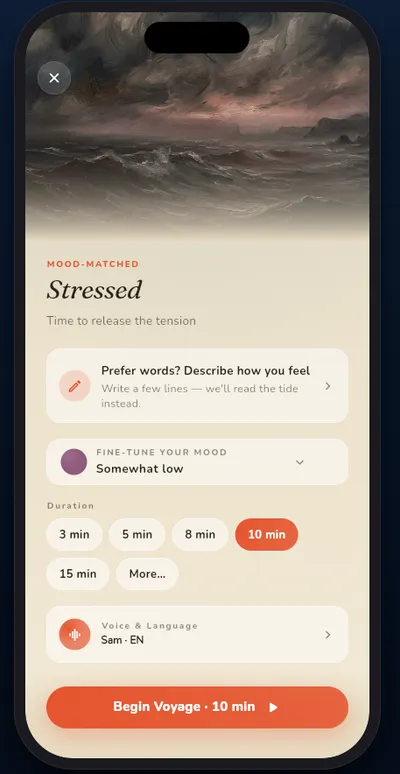

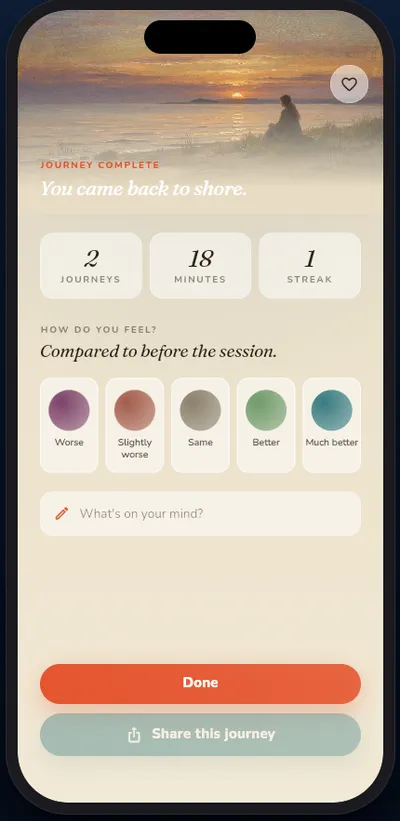
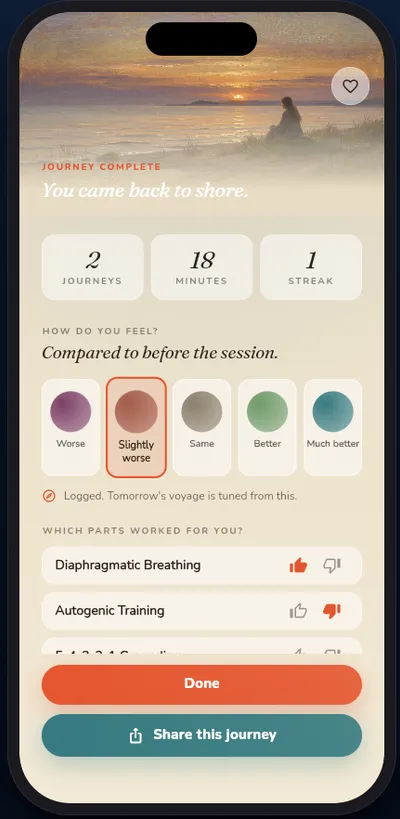
There’s no one technique for everything. That’s the point. A rough map of how check-ins steer toward categories:
A session isn't a shuffle of techniques. Each one follows a deliberate arc: settle the body, deepen attention, then integrate and close. It is the same structural logic used by evidence-based programs like MBSR and yoga nidra.
We start with the body, because attention works better once the body is calmer (a principle informed by the window of tolerance framework). And we never just stop: every session ends on a gentle, settling note. Positive, calming states have been shown to actively speed the body's recovery after effort, and research suggests the way an experience ends shapes how it's remembered.
